
STC data storage and display devices (ROM)
Imperial data storage is based on the revered single-modular STC template: the data-cube. These crystalline constructs are pressed, polished, and ignited by the grand auto-factoriums of several Imperial forge worlds.
A single STC data-cube is capable of storing an infinite amount of data—but it requires an infinite amount of time to upload or download. As the need for faster data transfer bandwidth between storage and cogitation units is imperative in large systems, data is distributed across vast quantities of data-cubes, coordinated by a central cogitator unit. Thus, while the basic components remain the same, they are simply stacked to gargantuan proportions—the Imperial method—for use in high-performance storage/cogitation devices or as components within larger habitats and vessels.
Portable data storage devices
Data-cube, Common
Enormous capacity for storing data, but upload/download times are too slow for storing more than a reasonable amount of data.
All Imperial data storage technology is based on the STC data-cube. Small systems operate around a single data-cube, while larger installations—such as data-vaults—are stacked with endless rows of data-cube racks.
Can be used to hide or smuggle sensitive information; small enough to be implanted under the skin.
Requires a data-cube reader/writer to insert or access information.
Component: Minuscule STC data storage module
Data-wafer, From abundant to unique
Size of Imperial Tarot card.
Components: Data-cube, hololithic projector, STC card operation interface, password generator.
-STC template data-wafer are used across the imperium as key-cards, for identity authorization as Cognomens and to command robots. Inquisitorial rosette in use of Inquisition or doctrina wafers used to operate Kastellan robots by Cybersmiths are examples of data-wafers used in the Imperium.
Wafers which contain hard-coded imperial propaganda are abundant, personal imperial documentation wafer, Cognomen, is scarce, stolen authority wafers (inquisition, imperial navy, ecclesiarchy, etc) are extremely rare.
-Lost STC wafers (unique operational configurations, missing Kastellan command wafers, archaotech password key-cards) are unique.
Data-Wafer (From Abundant to Unique)
Roughly the size of an Imperial Tarot card.
STC-template data-wafers are used across the Imperium as key-cards, for identity authorization (as Cognomens), and to command robots. Examples include the Inquisitorial Rosette used by the Inquisition, or doctrina wafers used by Cybersmiths to operate Kastellan robots.
Wafers containing hard-coded Imperial propaganda are abundant.Personal Imperial documentation wafers are scarce.
Stolen authority wafers (from the Inquisition, Imperial Navy, Ecclesiarchy, etc.) are extremely rare.
Lost STC wafers—with unique operational configurations, missing Kastellan command codes, or archaotech passcode key-cards—are considered unique.
Components: Data-cube, hololithic projector, STC card operation interface, password generator.
Data-slate, common, Rogue Trader Tools page 144
“Data-slates are commonplace in the Imperium, the primary means of storing and reading printed text and other media such as video or audio recordings. They are so cheap and easy to make that hard-wired contain a single media recording, such as text, and can only play that single file. Basic data-slates can record new information, or upload and download data from other devices.”
Hard-wired data-slates are abundant and filled with imperial or ecclesiarchical propaganda that enhances hypno-indoctrination of Imperial citizens. They can be about creed, imperial rules, saints, maps, etc.
Basic data-slate can record or download content and it can re-write it’s content.
Specific had-wired data-slates may be rarer, in example Almanax Astrae Divinitus, Extremely Rare, Rogue Trader corebook page 143.
It can be connected directly to MIU port and is a same size as the Imperial primer.
Components: Touch sensitive display, hololithic screen, data-cube and MIU interface
Memorance implant, DH2 page 184
“This implant is a neurally-linked datavault and pict-capture array, often incorporating augmetic replacement of one or both eyes, that records information on people or scenes viewed. It can then later replay that information, or overlay the present view with additional data on people and objects viewed. It is a tool of chroniclers, loremancers, and masters of ceremonies, as well as factors or nobles who like to see the secrets of their rivals overlaid upon their view of the negotiating table. It provides a +10 bonus to Trade (Loremancer) tests or other tests in social situations where the recorded information provides leverage or value.”
Components: Data-cube, sensor, MIU interface, cybernetic
Data-Chest Rare
Transportable.
Closed system: cannot be manually operated—only accessible via MIU interface or component link. Used to locally collect, store, and physically transfer large amounts of data.
A common component in Imperial structures such as precinct-fortresses, cathedrals, research facilities, and more.
Components: Armored casing AP 20, EMP shielding, Mechanicus firewall, rack of data-cubes, and MIU interface.
Data storage vessel/habitat components
Data-Vault Very Rare Power: 1 Space: 1
Imperial STC component. Grants +5 to Logic and Lore (once uploaded) checks for the habitat or vessel.
The Tech-Shrine (Laboratory included) and Administratorial Vault (Data-loom included) are upgraded variants of this STC template.
Requires a core or drive to power up.
Installed as a component in habitats, star fortresses, and voidships.
Includes a cogitator system and can be used to analyze and study data.
Components: Halls of data-chests, cogitator room, cooling system, EMP shielding, Mechanicus firewall.
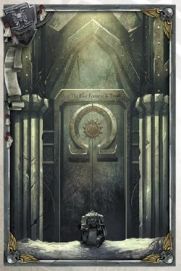
Data-mine, Legendary, (archaotech) Pow: 5 Space: 10
Ancient STC wonder. Knowledge of building such component is lost to the Imperium.
Independent power source.
Known vaults located to Terra, Mars and Jericho Reach.
Components: Archeotech mysteries
 Ignis Aeternus WH 40K campaign notes