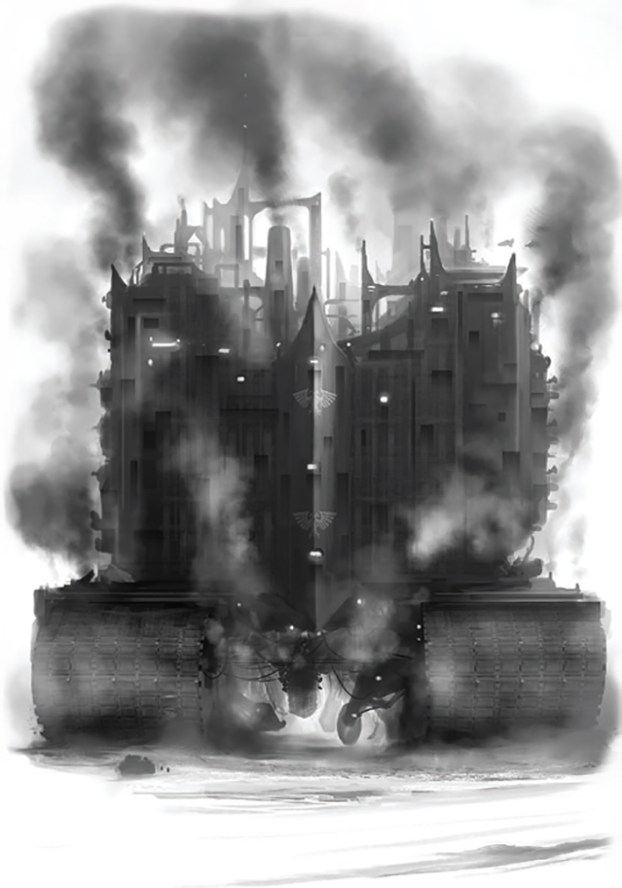
Imperial Codex Extract // Munitorum Fuel Ordinatus – M3.886.779.GF
“Promethium is the heartblood of the Imperium, pulsing through its great engines of war and commerce, expanding Mankind’s realm with the regularity of a drum beat. And when it is spilled, it burns away all the impure with the heat of our hatred.”
— Confessor Gaelach, Ordo Pyros, M41
Sacred Hydrocarbon
Promethium is the most widely used fuel in the Imperium of Man, powering everything from flame weapons and tank engines to civilian transport, emergency generators, lighting arrays, and jet fuel. The term “promethium” itself is used to refer to grades of STC produced flammable, combustion-ready hydrocarbon fuel used across Imperial territories.
In its most infamous form, promethium is refined into a highly volatile incendiary gel—used in the sacred flamer weapons of the Imperium. This substance ignites instantly upon contact, burns at extreme temperatures, and sticks to whatever it touches—burning even underwater, in vacuum, or in non-oxygen atmospheres.
Production Methods
“We drill not merely to burn, but to sanctify. The Flame of Promethium is the Emperor’s breath made manifest.”
— Lexmechanic Jurok Sile, Order of the Pyric Heart
PRIMARY EXTRACTION METHODS
The harvesting of raw promethium sources—whether fossil, organic, or atmospheric—relies on massive, industrial-scale machinery often built from pre-Imperial STC blueprints. These constructs are durable, clanking, smog-belching relics powered by combustion engines, servitor-labor, and arcane machine-rites.
Promethium Derricks (also: “Spire Drills”)
Towering iron spires, reaching deep into a world’s crust. Similar to early Terran oil rigs, these machines use counterweighted rotary drills, often accompanied by servo-piston drives, to bore into organic-rich substrates.
Key Components:
- Spire Drill Head: Reinforced adamantine bit, engraved with purity seals and litanies of penetration.
- Drill Pulp Feed Line: Transports slurry to surface processors via pressure-piston tubing.
- Omni-Sanctifier Engine: Steam/combustion hybrid engine, blessed with incense and sacred oils.
- Observation Cogitator Node: Monitors depth, pressure, and “spiritual stability” of the borehole.
Each successful bore is blessed by a Tech-Acolyte with flame and chanting before being operated.
Biomass Vats (“Compost Graves”)
Used in overpopulated or resource-starved worlds, these massive organic digestion cisterns break down crude biomass into promethium-grade slurry. The Compost Graves, as they’re called in hive slang, are notoriously foul-smelling, toxic, and highly sacred to certain fringe cults.
Acceptable Feedstock Includes:
- Agricultural waste
- Dead flora/fauna
- Abhumans, mutants, condemned prisoners, excess population (classified)
- Industrial detritus and sewage byproduct
Main Systems:
- Grinder Funnels: Augmented with rotating bone-saw blades and crushing piston columns.
- Digestive Reactors: Massive, bubbling vats where bacteria and heat decompose matter.
- Gas Extractor Looms: Pull volatile gases for bottling or feeding flame weapons.
- Purification Chimneys: Constantly venting fire, smoke and spiritual soot into the sky.
Compost Vats are often maintained by blindfolded Servitor-Priests who sing dirges to the Flame as the matter churns.
Seabed Pumping Towers (“Cathedra Siphona”)
Used on oceanic and swamp worlds. These massive structures float or are suspended over trenches, drawing deep biosludge or hydrocarbon slurry up through pressure hoses. Often named like churches or saints.
Components:
- Anchored Drill-Anchor Frames
- Hydraulic Pump-Chimneys
- Sludge Conduits
- Flame-Sanctified Condensation Arrays
These platforms feature shrines and icons facing the sea, where the Flame is ritually “lowered” each day to sanctify the deep.
Alternative sources for Promethium.
Several extreme bio-active environments provide stable and high-yield extraction systems that produce exceptionally high-quality fuels.
Death worlds with high biomass production
Death Worlds, with their brutal and hostile ecosystems, often possess excessive levels of biological activity, making them some of the most reliable sources of biomass for promethium production. These planets are often host to vast ecosystems of aggressive flora and fauna, capable of replenishing natural biomass resources at astonishing rates. The violent and rapid biomass cycle of these worlds allows for continuous, self-sustaining fuel production.
Harvesting Method:
- Biomass Harvesting: Similar to the techniques used on resource-rich planets, Death Worlds utilize mobile, fortified harvesting engines to extract both plant and animal matter. The high fertility of these worlds ensures that the raw biomass extracted is plentiful and ripe for processing.
- Rapid Growth Mechanism: On some Death Worlds natural waste—dead organic matter, toxic plants, or animal carcasses—decays quickly, feeding compost vats that churn out promethium with an efficiency unmatched by less fertile worlds.
Death Worlds are often protected by harsh fauna and atmospheric conditions, making them ideal for those seeking high returns at a risk.
Comet, Glacier & Ice World Extraction
In the coldest reaches of the galaxy, comet clouds, glacial worlds offer unique forms of bio-fuel extraction. Many of these worlds harbor bacterial life trapped in glaciers or deep ice caverns, specifically adapted to survive in freezing temperatures. These glacier-based organisms can be harvested and processed into promethium of the highest purity.
Key Features of Ice World Extraction:
- Frozen Bacteria and Algae: Organisms living in sub-zero environments are harvested in specialized drilling operations. These creatures, though microscopic, produce clean and highly efficient fuels ideal for aerospace operations, including jet fuel.
- Ice-Siphoning Rigs: Massive siphon towers are sunk into glaciers, pulling ice cores which are then broken down in bio-reactor vats to extract the concentrated fuels.
- Some star vessels have component that allows it to gain resources from comets in a similar way but that is used to resupply the vessel not for large scale production.
The purity of promethium extracted from glaciers makes it highly prized for atmospheric propulsion and high-altitude military operations.
Cloud Mining of Gas Giants
In addition to the mineral-rich moons and bodies, gas giants provide a unique and dangerous source of promethium. Cloud mining operations siphon volatile gaseous hydrocarbons directly from the upper layers of the planet’s thick atmosphere. These gases can then be processed into liquid promethium.
Mining Techniques Include:
- Atmospheric Extractors: Floating skyborne platforms with massive suction funnels and filtering arrays are used to collect volatile gases, which are then processed into liquid hydrocarbons.
- Atmospheric Condensation Units: Using massive ionized condensers, mining operations condense the raw gases into liquid promethium, often used for fueling voidcraft and high-speed military vehicles.
- Some star vessels have component that allows it to gain resources from in a similar way but that is used to resupply the vessel not for large scale production.
This form of promethium extraction is extremely dangerous, with mining platforms often at the mercy of violent planetary storms and the constant risk of atmospheric collapse.
Some Specialized Promethium Types (By Source)
| Source | Ideal Use | Notes |
|---|---|---|
| Glacier Bacteria | Jet Fuel | High-purity, stable, |
| Swamp Biomass | Armored Ground Vehicles | Dense combustion, high torque |
| Hydrothermal Vent Organisms | Ecclesiarchal Gas Lighting | Radiant, long-burning |
| Hive Detritus | Civil Engines / Waste Burners | Impure, pollutive |
| Penal Biomass (Rumored) | Flame Weapons | Morally uplifting, |
“The purer the feedstock, the more righteous the flame.” — Magos Pyrotektor Dolaris IV
Promethium and the Faith
Promethium is not merely fuel—it is divine fire, the purifying flame of the Emperor’s wrath. The Ecclesiarchy and its militant orders view fire as the ultimate purifier of sin, heresy, forbidden knowledge and xenos taint. Flame weapons fueled by promethium are common among:
- Sisters of Battle
- Imperial Guard purification units
- Ordo Hereticus
- Followers of Orders of Eternal Flame
- Pyreans
- Red Redemption
- Officio Historica
In some sectors, Promethium is literally worshipped. The Promethium Guild (Mercator Pyros) of Adeptus Mechanicus sees the Emperor in His aspect as the Eternal Flame. In these cult-like orders, eternal fires are passed from generation to generation, and guild agents carry this flame through the underhives as a sacred rite, lighting forges and engines in ceremonial honor.
“He Who Burns is He Who Cleanses.” — Guild Litany, Necromunda Hive Primus
Orders of the Eternal Flame
Alongside these grim industries exist the Branded Orders—zealous religious cults and guilds dedicated to maintaining, operating, and worshipping the systems of fire and fuel. Their beliefs hold that Promethium is sacred, and flame is the Emperor’s divine will made manifest.
Common Orders
Order of the Combusting Truth, Adeptus Mechanicus Cult
- Role: Overseers of flame purity, refinery procession priests.
- Belief: Every molecule of promethium is a fragment of the Omnissiah’s spirit. Tithes of flame must be offered daily.
- Tools: Incense braziers, thermic censers, pyre-robes stitched with heat-wicking script.
- Adversaries: Fierce doctrinal disagreement with electro-priests.
The Ember Carriers, Ecclesiarchy priesthood
- Role: Liturgical flamekeepers and chant-leaders of hive worlds and other imperial habitats lacking daylight.
- Belief: Flame must never go out. They maintain eternal torches passed from generation to generation.
- Tools: Flame-torches, hymnals of combustion, ignition-staves.
The Gutter-Saints, Fringe cult
- Role: Maintain compost vats and slurry gutters. Regarded as half-mad mystics.
- Belief: Through rot, holy flame is born. Decay is but the womb of purification.
- Tools: Gas masks with reliquaries, sludge-thuribles, bone-etched shovels.
The Lamplighters’ Guild, Ordo Munitorum cult
- Role: Fuel distributors and civic flame technicians.
- Belief: Lighting a hive furnace with the Eternal Flame redeems entire generations.
- Tools: Gilded spark-tools, sacred fuel gauges, flame-tabards bearing the God-Emperor’s visage.
The harvest of promethium is a sacred industry: half machine, half religion. Its infrastructure is crude, rusted, and vast—rising like cathedrals over oceans of fire and filth. From the screaming grinders to the soot-streaked towers, each component of the system breathes with the divine combustion of Imperial will. And behind it all, robed figures keep vigil beside flickering flames, whispering prayers to keep the sacred fuel burning—for if the fires ever go out, the darkness will reclaim all.
The Promethium Guild & the Fuel Wars
The Promethium Guild of Adeptus Mechanicus, also known as Mercator Pyros, controls fuel rights across Hive Worlds like Necromunda. They oversee refining, distribution, and pricing of all burnable liquids and compete fiercely with rival factions such as the Electro Guild, who push for plasma and energy-based alternatives.
Their operatives are fanatics, often tattooed with burn-scripture, wielding sacred flamers, and considered near-priests in the lower hives. Their lighters and igniters are heirlooms passed through bloodlines.
PROMETHIUM EXTRACTION FLEETS
“To burn a world to feed a war is no sin—so long as that war serves the Throne.”
— Pyrocaen Lord Hextus Flaviux
Overview
The Imperium of Man deploys vast, mechanized Promethium Harvest Fleets across the galaxy to identify, process, and strip-mine carbohydrate rich worlds. These fleets are an amalgamation of refinery ships, orbital drill platforms, purification barges, and cargo-tithing convoys operated by the Adeptus Mechanicus, Mercator Pyros, and various local Merchant Guild affiliates.
Once a viable star system is located, extraction operations commence and often reshape the system’s entire industrial and ecological identity over the course of several centuries to millennia.
Phases of a Promethium Extraction Campaign
I. The Ignition Stage – Surface Riches
The first stage focuses on the direct exploitation of high-density organic deposits such as fossil fuels, hydrocarbon lakes, jungle biomass, algal oceans, and fungal forests on habitable planets or moons.
Assets Deployed:
- Orbital survey rigs and purity-assessment satellites
- Massive Spire Drills, Compost Graves, or Cathedra Siphona
- Flame Orders and Guild convoys begin sanctifying the operation
Systemic Impact:
- Boom in commerce and industrial activity
- Influx of workers, indentured labor, guilders, and mercenary forces
- Massive infrastructure expansion: spaceports, storage silos, refinery hives
Duration: 100–200 years (average)
“These worlds are green no more. They belong to fire.” — Magos Ignitarch Velo XII
II. The Ember Stage – Deep Extraction
As surface deposits are depleted, operations turn to subsurface reservoirs, seabed sludge, deep-sea biostrata, glacial microbes, and buried organic-rich strata. Lower-yield materials are now processed using established infrastructure.
New Sources Tapped:
- Deep underground deposit of fossil fuels
- Deep-sea crystals, rotting marshes
- Glacier-core bacteria and subpolar algal slurries
- Bio-degraded detritus via Compost Thrones
Systemic Impact:
- Pollution of atmosphere and oceans
- Planetary weather destabilization
- Beginning signs of ecosystem collapse
- Decline in civilian life expectancy, rise in servitor labor and penal workforce
Duration: 100–300 years
III. The Cinder Stage – Interplanetary Harvesting
With planetary resources near exhaustion, attention shifts to spaceborne carbohydrate reservoirs:
- Comet clouds rich in frozen hydrocarbons or microbial cysts
- Ice rings of gas giants
- Atmospheric scoop-mining from gas giants
The infrastructure of the system—already vast—is repurposed for interplanetary-scale logistics. The star system becomes a refinery hub, even as its planets begin to decay.
Systemic Impact:
- Asteroid mining lanes, orbital refineries, and deep-space fuel rigs dominate commerce
- Starports and trade stations become choke-points for resource flow
- Planetary populations either collapse or are relocated entirely to orbital habs
- Environmental collapse completes on primary planets; population mutates immunity to toxic or is replaced with mechanical.
Duration: Up to 1,000–2,000 years (comet cloud viability varies by system)
Afterword
Promethium is more than fuel—it is merhandize, weapon, and faith. It powers the endless war machine of the Imperium, but at tremendous cost to both life and worlds. Every fire ignited by its power carries the Emperor’s judgment. Whether used in flame, forge, or fury, promethium never burns clean—but it always burns.
 Ignis Aeternus WH 40K campaign notes